Posts

EGU 2015 End Week Update: A Young Scientist participating in the Discussion

Afbeelding
The General Assembly of the European Geophysical Union in 2015 has come to an end. I am filled with new information, new ideas, motivational energy, great experiences, and encounters with new and interesting people. Waiting for my flight back home, I have time to reflect on the final few days of this incredible experience. Last blogpost, I gave an update of the first two days. I was working that day on my rebuttal for a new paper. I submitted the paper to a journal, which is using a short response time of two weeks, and with Easter and preparation for the conference, I had little time to work on it. On Wednesday, my personal program only needed me to be at the evening poster sessions, so during the day, I locked myself up in my hotel room and worked on the rebuttal (despite the beautiful weather). It is now with the editor for decision! Nevertheless, I had an interesting time in the evening. Day 3: Wednesday 15 April 2015 Arriving late at the EGU conference site, I went direc...
EGU 2015 Mid Week Update: A Young Scientist among Giants

Afbeelding
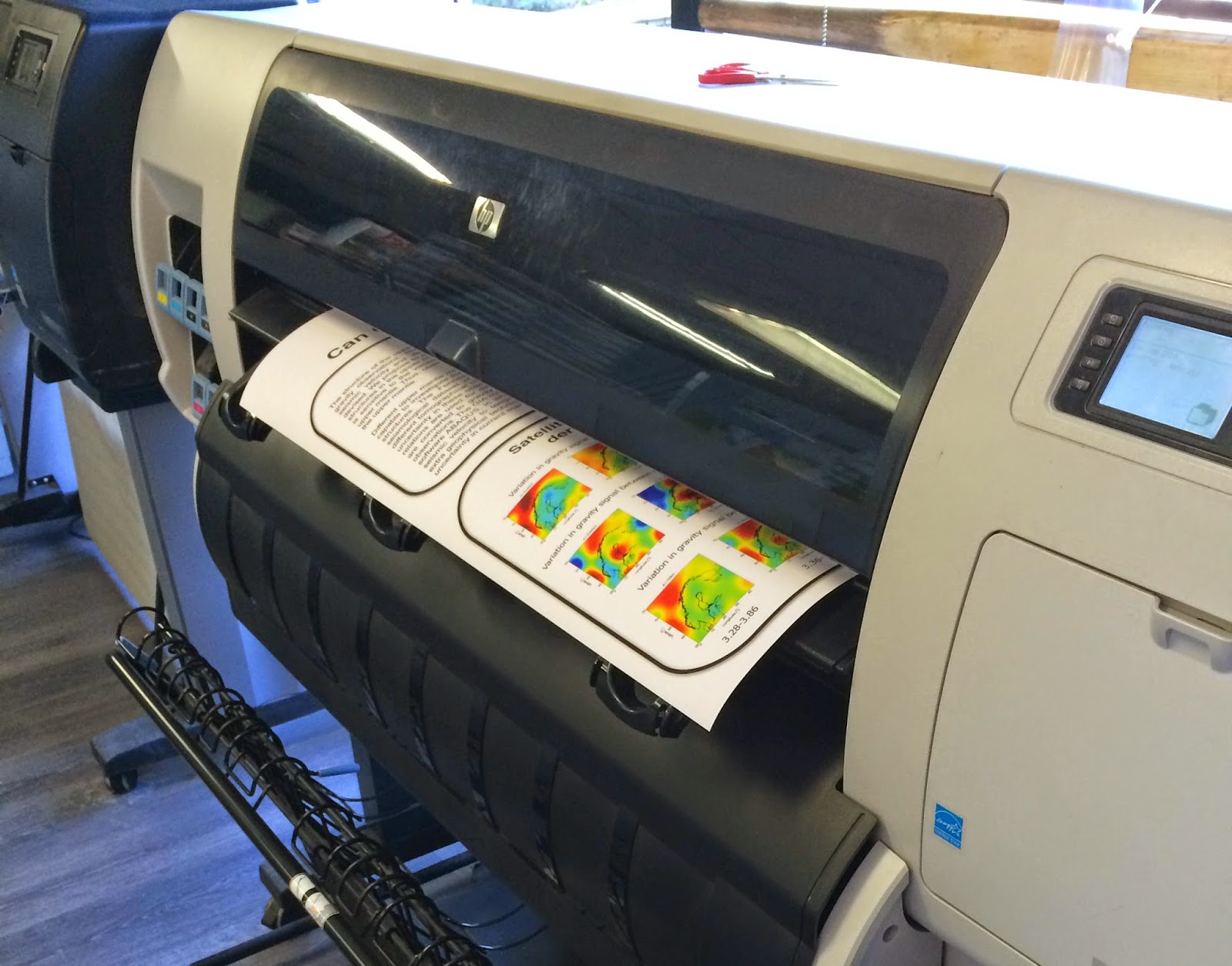
With the European Geophysical Union General Assembly halfway there, it is time for me to sit and write down all my experiences as a young scientist. From sitting behind your desk, interacting with max 3 living beings (one of them is my office plant), to literally meeting thousands of scientists from around the world can be a little bit exhausting. Therefore, I have my mid week moment-of-zen, which I use to write this blog. Pre-EGU2015 adventures: Due to a tight-scheduled revision of one of my papers, I had little time to design and print my poster, forcing me to drop by the print office on my way to the airplane. After a provocatively slow printer, I hurried to the airplane and got my flight to Vienna. After extra long minutes my poster was ready to go! Arriving at Vienna, I checked in my hotel, after a short train ride from the airport. During the waiting on the platform and the train ride, you could spot them already: other scientists, still a little weary from the fli...

Gravity Expeditions at Sea

Afbeelding
This week one of the major milestones of the Vening Meinesz project is a fact. The website is online, where you can follow the adventure of professor Vening Meinesz onboard the submarine K-XVIII! He sailed from Den Helder, Netherlands to Surabaya, Indonesia via a large detour, visiting ports on several continents. Along the way he measured the gravity field of the Earth with extreme precision. He did this with a pendulum apparatus onboard a moving vessel. A great achievement done by a great scientist. Please explore the website and tell me what you think of it. Enter here ! Oh, for none Dutch speakers, just skip the introduction of the main app, the expedition of Vening Meinesz is written in English. Yet, if you can read Dutch, please check my interview in the TU Delta (University paper) about the project, here  (page 18). The captain and crew of the K-XVIII with the professor among them.

Observing the shape of the Earth

Afbeelding
A few weeks ago, I visited a dear friend of mine at the University of Kiel. He is a professor in geosciences over there. He invited me to meet his team and learn about what they are doing. It was a great week with lot of learning moments. I advise every PhD student and scientist to once in a while visit other groups in your field to see their point of views. Also, it is nice to get out of your office and see the world.  I want to write about one particular learning moment that week, which was a field tutorial with the LaCoste-Romberg gravimeter. This particular device is able to measure relative gravity variations up to 10 microGal. That is a relative variation of 9 digits after the 9.81 m/s^2 (in the Netherlands). This is the domain where you can feel the pull of the Moon, when it is orbiting above you. Wow!!! The Lacoste-Romberg gravimeter in the field.  The LaCoste-Romberg was invented already in 1932 by Lucien LaCoste and his teacher Arnold Romberg, who'd came...

Delfi-C3 still working after almost 7 years!

Afbeelding
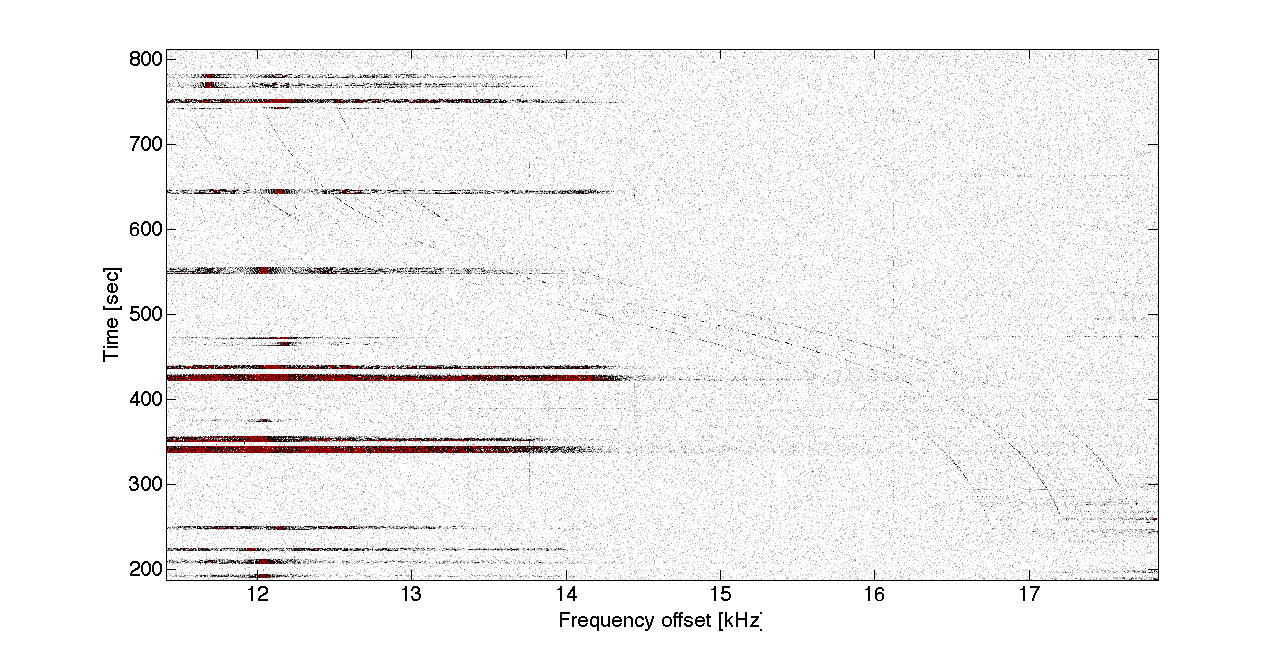
Did you hear about the story of a small satellite designed and build by students of Delft University of Technology? I mean a real satellite in SPACE!!! It is still flying and transmitting data back to Earth and you can listen to it! Some of my nerdy friends have complained that I cannot listen to the sound of satellites as I various times state on this blog (e.g. post , post , and post ). Something to do that sound does not propagate in vacuum, and space is almost vacuum. So, yes satellites do not make sound (20-20000 Hz for the human ear), however in my defence you can transform their radio signal (145.870 MHz) into sound. Its the same trick scientists do when they listen to the SOUND the universe makes (listen to it here !). But, lets get back on topic! Delfi-C3 is still operating and in honour of its almost 7 years in space, I wanted to write a small piece about it. To see if it is still operating, I have recorded the downlink signal of today's passes. After a Fourier t...

The Earth is not flat, and it is certainly not round!

Afbeelding
One year ago my friend went on a journey on the ' Oosterschelde ', he sailed from New Zealand to the Falkland Islands crossing the South Pacific and rounded Cape Horn. Together with other sailing enthusiasts, he endured the elements of the ocean and enjoyed the many exciting times he had onboard. As you may have read in my previous post , I gave him a GPS receiver for an experiment I wanted to do. He placed it on board in good view of the sky and turned it on. Despite several reception losses (storms or other effects), the data clearly shows the path of the journey. They started in Auckland, New Zealand, where they departed on the 30th of October 2013, to set sail to Chatham Island. This small island is governed by New Zealand and is closely situated to the International Date Line. Lets say the day starts on Chatham Island. After a small visit on the interesting island, the 'Oosterschelde' and its travelers started the long crossing of the South Pacific. The cros...

The start of construction of the TUDelft satellite tracking station: DopTrack

Afbeelding
Monday 20 October 2014, we started the construction of DopTrack, a satellite tracking station on top of the tallest faculty of Delft University of Technology for students to use in satellite orbit determination. I will try to report on our findings of building it in this blogpost. We are in the process of setting up a dedicated website, but for now you have to do my blog ;) Project DopTrack As a master student, I followed several courses on orbit determination and satellite data analyses in the Astrodynamics & Space Missions group. During this time, I also observed the design and launch of two cube-sats of the space system engineering group. I was inspired by what students and university staff could accomplish. Come on, they launched two satellites in space. SPACE!!! However, after launch and succes of the missions the satellites were left alone. It would be cool to combine the use of these satellites and the knowledge from satellite data analyses courses. So I decided, when...