Posts

Er worden posts getoond met het label TUDelft

Paving the way for our presence on the Moon

Afbeelding
Reading the books and watching the TV series “the Expanse” awoken my old boyish-dreams of our presence on the Moon. Growing up with a dad that introduced me to the fantastic worlds of Larry Niven, Brian Aldiss, Isaac Asimov, Jack Vance, and Arthur C. Clark, gave me hope for the future and it motivated me to start my studies in Space Engineering. The science fiction became real-life science and engineering and I began to understand why the future was not yet achieved. We have made space engineering very complicated and expensive, which allowed only nations to perform this type of activities. But, I am living in the future of my old heroes of words and spaceflight has a permanent role in our daily life.  And more and more young engineers want to participate, because space is not that complicated anymore. We evolve as humans, such that complicated problems in the past are simple issues in the future. James S. A. Corey (A.K.A. Daniel Abraham and Ty Franck) hints to this as well in...

Delfi-C3 is feeling the power of Spring

Afbeelding
All the trees have blossom, baby ducklings are rooming the ponds, and we get more Sun: we survived the winter! Spring is here to give us our much needed vitamine D.  Spring on the campus of TU Delft Not only on the surface of the Earth this is felt, but also in outer space. The Delfi-C3, now more than 9 years orbiting our Earth, notices that spring has arrived on the Northern Hemisphere. During winter, our ground station (DopTrack) only receives data during the morning and mid day (between 8:00 and 13:00 CET). Starting from April, we start receiving signal around 20:00 CET. Fraction of a 24 hour day (UTC) at Time of Closest Approach (TCA) of the Delfi-C3 with DopTrack. We saw this already last year, when in April the telemetry of Delfi-C3 started appearing in the evening. The Sun was already set on the ground, but at 560 km height light was still shinning on the solar cells of the satellite. The satellite is designed such that when sunlight hits the solar cells and eno...

Interacting of the SDR with Matlab during my classroom tutorial

Afbeelding
This year was the second time I gave my tutorial with an SDR dongle. The idea behind this tutorial is to simulate ground-station-to-satellite interaction in the radiowave spectrum. The ground station is replaced by the SDR dongle and the student's computer. For the satellite, I use a radio beacon designed and built by a colleague of mine. The device transmits an FSK modulated signal at a certain frequency. During the tutorial, the students learn to develope software that interacts with the SDR, such that they can process the digital stream observed by the SDR. I made a small video of the signal with GQRX software, such that you can see the signal in the frequency spectrum and listen to the FSK modulation. Last year, I was using an open-source software package "gnuradio" for the signal processing part, but I found out that this introduced a lot of trouble-shouting in the first few hours, because of students having: different operating systems and versions (every s...

How to make a spectrogram or waterfall plot

Afbeelding
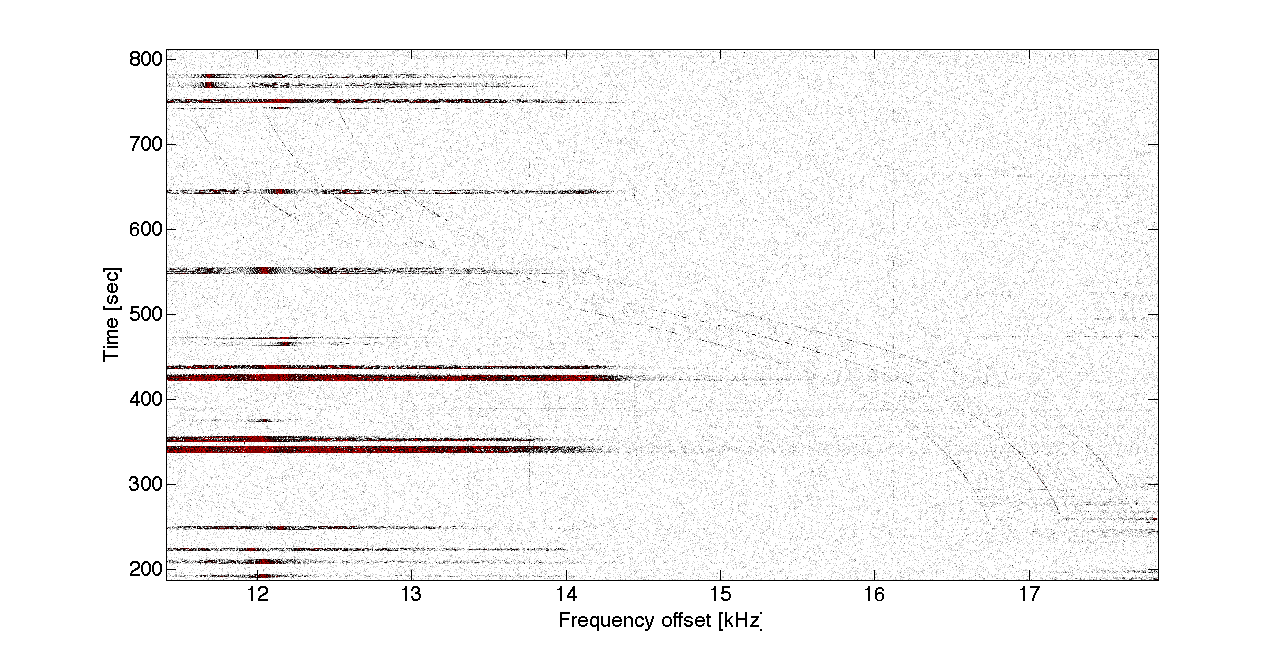
In a few blogpost ago, I showed you several figures of a satellites transmission. You know, those beautiful S-curve plots with all the colours.  Those are called spectrograms or we like to call them waterfall plots, because the radio transmissions streams up in time like a reversed waterfall. To see such a waterfall plot live in action, the University of Twente opened their antennas for you to listen and see (see link ). Yet, how to make such a figure? To start with you need a recorded radio transmission. When the website of the TUDelft tracking station is up and running you can download some data there. However, (Start NerdAlert!) you can also buy your own little USB stick that acts like a software defined radio (SDR) receiver like the Logilink DVB-T . For only 20 euros you have your own satellite tracking station. NOTE: Beware! You need the RTL2832U chip version, because a lot of open software is written for that device. It is almost plug and play, you need some software, b...

Observing gravity on a moving ship

Afbeelding
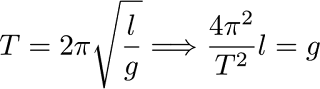
In the beginning of the 20th century the gravity field of the Earth was only measured on land. Of course, to obtain a complete image of the Earth's gravity field the oceanic area (covering 74% of the Earth) should also be inspected. However, in those days that was a difficult task. Gravity could be measured by several different instruments, but for them to work a stable platform was needed. This is difficult to arrange on a rocking ship. For example, the falling mass principle was used by Simon Stevin (1548-1620), who dropped balls of lead from the New Church in Delft, Netherlands. Later, a dutch sailor and scientist called Christiaan Huygens (1629-1695) found the relation between the period of a pendulum and gravity (I used this relation earlier in the my blog). This is now called the Christiaan's Huygens law. With it the operator was able to measure gravity with a single pendulum, but needed a stable platform, such that horizontal movement did not interfere with the...

Gravity Expeditions at Sea

Afbeelding
This week one of the major milestones of the Vening Meinesz project is a fact. The website is online, where you can follow the adventure of professor Vening Meinesz onboard the submarine K-XVIII! He sailed from Den Helder, Netherlands to Surabaya, Indonesia via a large detour, visiting ports on several continents. Along the way he measured the gravity field of the Earth with extreme precision. He did this with a pendulum apparatus onboard a moving vessel. A great achievement done by a great scientist. Please explore the website and tell me what you think of it. Enter here ! Oh, for none Dutch speakers, just skip the introduction of the main app, the expedition of Vening Meinesz is written in English. Yet, if you can read Dutch, please check my interview in the TU Delta (University paper) about the project, here  (page 18). The captain and crew of the K-XVIII with the professor among them.

Delfi-C3 still working after almost 7 years!

Afbeelding
Did you hear about the story of a small satellite designed and build by students of Delft University of Technology? I mean a real satellite in SPACE!!! It is still flying and transmitting data back to Earth and you can listen to it! Some of my nerdy friends have complained that I cannot listen to the sound of satellites as I various times state on this blog (e.g. post , post , and post ). Something to do that sound does not propagate in vacuum, and space is almost vacuum. So, yes satellites do not make sound (20-20000 Hz for the human ear), however in my defence you can transform their radio signal (145.870 MHz) into sound. Its the same trick scientists do when they listen to the SOUND the universe makes (listen to it here !). But, lets get back on topic! Delfi-C3 is still operating and in honour of its almost 7 years in space, I wanted to write a small piece about it. To see if it is still operating, I have recorded the downlink signal of today's passes. After a Fourier t...

The start of construction of the TUDelft satellite tracking station: DopTrack

Afbeelding
Monday 20 October 2014, we started the construction of DopTrack, a satellite tracking station on top of the tallest faculty of Delft University of Technology for students to use in satellite orbit determination. I will try to report on our findings of building it in this blogpost. We are in the process of setting up a dedicated website, but for now you have to do my blog ;) Project DopTrack As a master student, I followed several courses on orbit determination and satellite data analyses in the Astrodynamics & Space Missions group. During this time, I also observed the design and launch of two cube-sats of the space system engineering group. I was inspired by what students and university staff could accomplish. Come on, they launched two satellites in space. SPACE!!! However, after launch and succes of the missions the satellites were left alone. It would be cool to combine the use of these satellites and the knowledge from satellite data analyses courses. So I decided, when...

Listening to the sound of satellites

Afbeelding
Last week, components of the TUDelft satellite tracking station were delivered. This includes a radio, amplifiers, Software Defined Radio (SDR), a GPS-based clock and other cool electronics. We are now planning the integration of all the components in the existing ground station, which is used for the data downlink and command uplink of the Delfi-C3 and Delfi-n3Xt (both student designed and built satellites currently orbiting Earth). But how does this tracking (you speak of) works? It starts with capturing and recording the communications signal of the satellite, which is transmitted continuously (if the Sun shines on the solar cells to produce energy). This is where all the fancy and complicated electronics play a role. (However, I am not an expert in this, so I will only explain the physics behind it). The high frequency (145.870 MHz) electromagnetic signal is down-converted to a signal that can be made digital, such that a computer can process it. First we put the signal throug...

TUDelft students are awesome!

Afbeelding
A few weeks ago the second TUDelft satellite (Delfi-n3Xt) was successfully launched into an orbit around Earth. In space, yes! This satellite was designed and built by students of my university. However, their other 5-year-old satellite (Delfi-C3) is still flying and communicating its data towards Earth. A student, a colleague and I are using this old satellite to test our idea for a new satellite-orbit determination-project. I always like to call it: "Listening to the sound of satellites" (see previous posts).  During the launch event I was thinking that it would be cool to capture both satellites' transmission in one observation using the VHF antennas. So I ask the ground station operator (the student), if this was possible. After a few days he send me this figure: He found a day that both satellites were visible from the TUDelft ground station. The red line is the orbit track of the Delfi-n3Xt (new one). The green cross is the location of the TUDelft ground...

Delfi-n3Xt baby sounds...

Afbeelding
This morning I got up earlier today to attend the Delfi-n3Xt launch event in our faculty. Delfi-n3Xt is a nano-satellite (the size of a milk carton) which is built by students and staff of our faculty. Launch events are always exciting, because you don't know what will happen. But after two stressful hours we got the confirmation, "Nano-sat number 7 successfully deployed." This was followed by some cheerful cheers. However, was it turned on? This blog started with some post about listening to satellites using the ground station on top of EWI (faculty of electronic engineering, mathematics and computer sciences). This ground station is mostly set up by a student which I assist in teaching him to track satellites. So this gives me the opportunity to get the telemetry data of the Delfi-n3Xt quite fast. It's good to be a teacher :). The next figure will show the satellite's first sounds in space: Click on the figure to get a larger view. In the bottom left...

A submarine voyage into the gravity field of Earth

Afbeelding
Plate tectonics is a theory that is only 60 years old. Before this time, people were seeing Earth as a solid un-deformable piece of rock. Imaging you being a geophysicist in those days (ok, if you are currently not a geophysicist this is even more difficult, but in comparison try to explain the wonders of the internet to your grandparents.), having trouble to explain most of the things that where observed. In those times a civil engineer, educated in Delft (my university :) ), went on a submarine voyage, measuring the gravity field of Earth. Wow, they should make a movie about this (I think they even did)! With his own designed pendulum equipment, the Dutch engineer could measure the gravity field with an accuracy up to a few mGal (which is very impressive, just trust me). Who is this brave, 2 meter tall (which I like because I am the same height), submarine-sailing hero? Born on 30 July 1887 in The Hague, he was named Felix Andries Vening Meinesz. I am currently work...