Posts

Er worden posts getoond met het label science

EGU 2015 Mid Week Update: A Young Scientist among Giants
Afbeelding
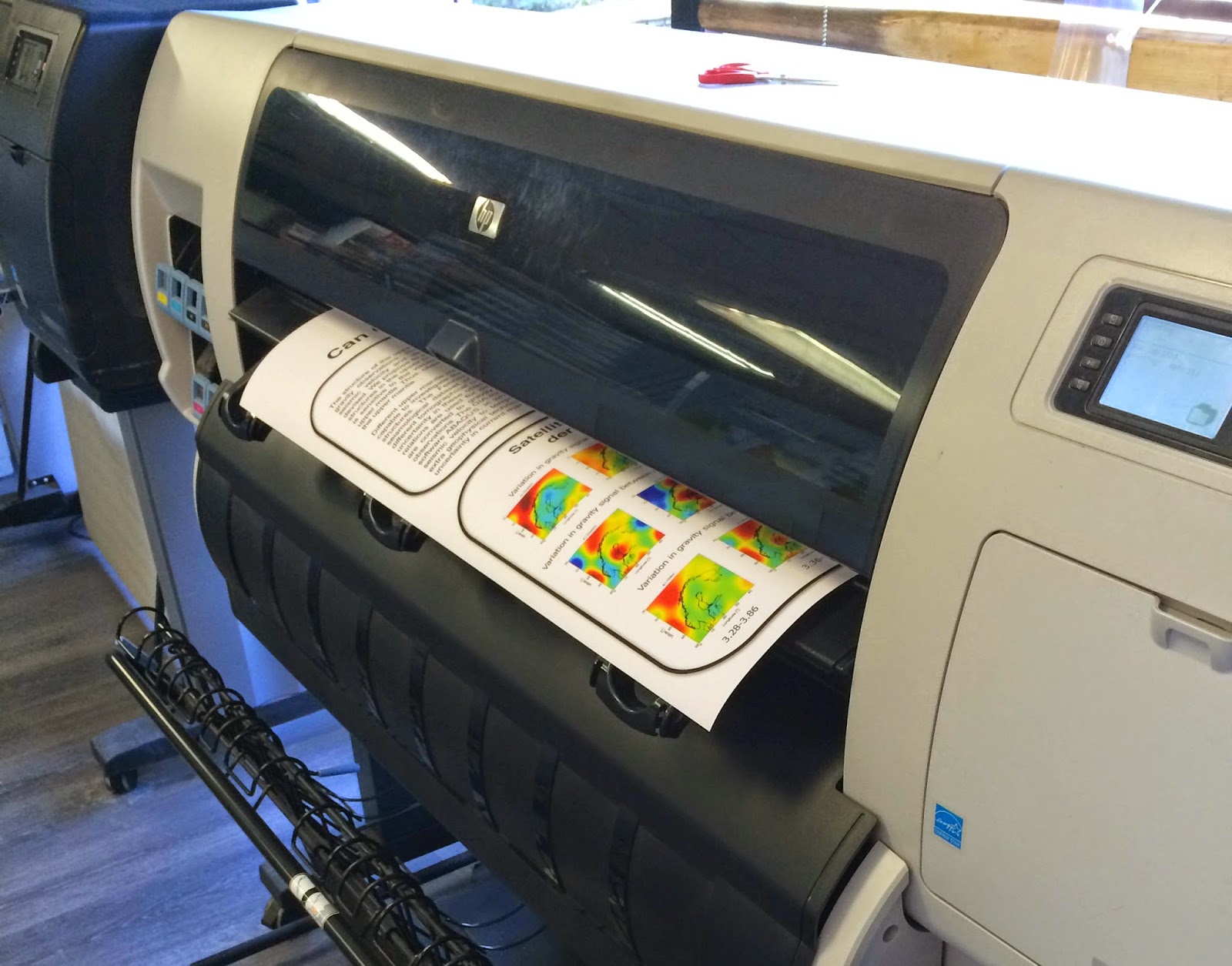
With the European Geophysical Union General Assembly halfway there, it is time for me to sit and write down all my experiences as a young scientist. From sitting behind your desk, interacting with max 3 living beings (one of them is my office plant), to literally meeting thousands of scientists from around the world can be a little bit exhausting. Therefore, I have my mid week moment-of-zen, which I use to write this blog. Pre-EGU2015 adventures: Due to a tight-scheduled revision of one of my papers, I had little time to design and print my poster, forcing me to drop by the print office on my way to the airplane. After a provocatively slow printer, I hurried to the airplane and got my flight to Vienna. After extra long minutes my poster was ready to go! Arriving at Vienna, I checked in my hotel, after a short train ride from the airport. During the waiting on the platform and the train ride, you could spot them already: other scientists, still a little weary from the fli...

How to stay at the boundary of our current knowledge

As a scientist, your are expected to be at the boundary of the current knowledge in your field. You should know which state-of-the-art methods are used. The newest findings should be know to you. And more importantly, you should know what is still unknown. As a PhD candidate, you are learning to become a self-sustainable researcher. Therefore, a PhD candidate should, in the end, be at the boundary of the current knowledge of his subject and maintain that knowledge. So how do you keep up with the fast expanding frontier of knowledge in your field? My trick to stay at the boundary of the current knowledge is to keep an eye on the most important journals in my field. You can do this even if you are not subscribed to the journals. Every journal has an RSS feed (I know this is an ancient tool, but it works so why don't use it), that gives information on the latest publications of the journal. Most of the cases, it releases the abstracts of the latest accepted articles. Jour...

Attending a talk of one of my scientific inspirations

Afbeelding
It all started with a delay of four hours. Being on our route for over an hour (above Scotland), the intercom of the airplane (a MD11 type of aircraft) sounded: "This is your captain speaking and I have some bad news." There was a technical problem that could not be fixed in San Francisco, so it was decided to fly back to the airport Schiphol, Amsterdam. I was just finishing my first beverage. One of my colleagues told me that he had several experiences like this with MD11 aircrafts. They are old and should be taken out of service. But for now we got a different MD11 that would take us to San Francisco. Four hours later than originally planned, we arrived in the Fog City (it was a clear day). However, at the gate after the pilot had shut down the engines, the ground personnel tried to connect the power cables such that the doors could be open. Only this was not working, so 350 already a bit weary passengers were stuck inside the aircraft. And no power means no air-conditioni...

Melting of the ice, backwards

Afbeelding
A few days ago, two workmen were fixing my sewer and plumbing system underneath my house (It was kinda smelly). During the coffee break (which is the theme in my blog, all good things come from a coffee break), I had to explain what I did at the university. So I explained that I was looking at the motion of the Earth's crust due to ice loading during the late-Pleistocene ice age (well not in those words, and I did not mention, that I was doing this with satellite data, because my experience tells me to leave this part out. If you use the word satellites, people just stop listening and laugh). They found it very interesting ;). I know, it is an abstract subject and difficult to grasp (it took me several months to fully understand the complexity of the problem, I am still working on how to solve it). Last week I needed to look at the ice sheet, that caused the motion of the crust that we observe today. People have made models on the growing and melting of this ice sheet, us...

Trying to figure out spacetime bending

Afbeelding
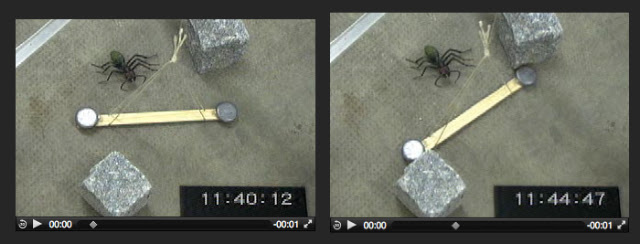
A few years ago I was obsessed about Einstein's theory of gravity. I wanted to know everything about it, so I browsed a lot on the internet, trying to find information about the topic (I could have gone to the library, however I was still in the frame of mind that everything on the internet is correct). So one day I came across the following website: Bending Spacetime in the Basement . Wow, can one do this at home?!? First take a good look at the website. He's got a point by stating that he is bending spacetime. It unfortunately has nothing to do with warp-drives and wormholes (Which was what I was looking for), but his experiment is quite cool nonetheless. It somehow proves (I will discuss this later on) that the theory of gravitation found by Newton, not only works for planet and stars, but also for smaller everyday objects. Everything attracts each other. Impressed by the simplicity of the experiment and the fact that it is about gravitation (I think this is one of...

Doubts of two scientists...

Afbeelding
Last week I finally solved my satellite signal processing problem (with the help of my dear colleague). As I posted a few weeks ago, we are setting up a tracking station for satellites with some students here at the TUDelft. We record the signal coming from satellites and try to extract the frequency and frequency shift of that signal. Using the Doppler effect we can make an educated guess of where the satellites are and how fast they orbit the Earth (which is super-awesome!). However, back to the problem. We record the signal in .wav format. This file consists of two channels, which both represent a signal as a time-serie with deviations from zero (when plotted it looks like a wavy pattern). However, there are two channels and at first I only used one of the two channels (I know now this is wrong, but hé, it was my first time dealing with this). In my first blog-post I showed a figure of the signal, however this figure was made by professional (wel, I think) open-source software. As...

Another blog about satellites (but they never get boring)

Afbeelding
Satellite? But that is just a flying (we say orbiting) robot in outer space. Why am I so enthusiastic about a bit of metal rubble that is flying 7 km/s at an altitude of a few hundreds of kilometers above the roofs of our houses? Just because I can... A few days ago  Holland  was in a high energy state. We broke a record. *sigh* It was the hottest day in March since...well since we measured temperature. The Dutch media had nothing else to report, but this glorious moment in history. Luckily for you guys, there is the DeepEarthScience blog! So what did I do that day? I was standing on the roof of the tallest building in Delft looking at the city centre and thinking by myself: "This could be a good topic for the blog." The view was awesome: In the back, a beautiful view of city center Delft in all its glory. And even further away the city of our government Den Haag. In the front-right of the picture you can see our two antennas...