Posts

Er worden posts getoond met het label orbital dynamics

Delfi-C3 still working after almost 7 years!
Afbeelding
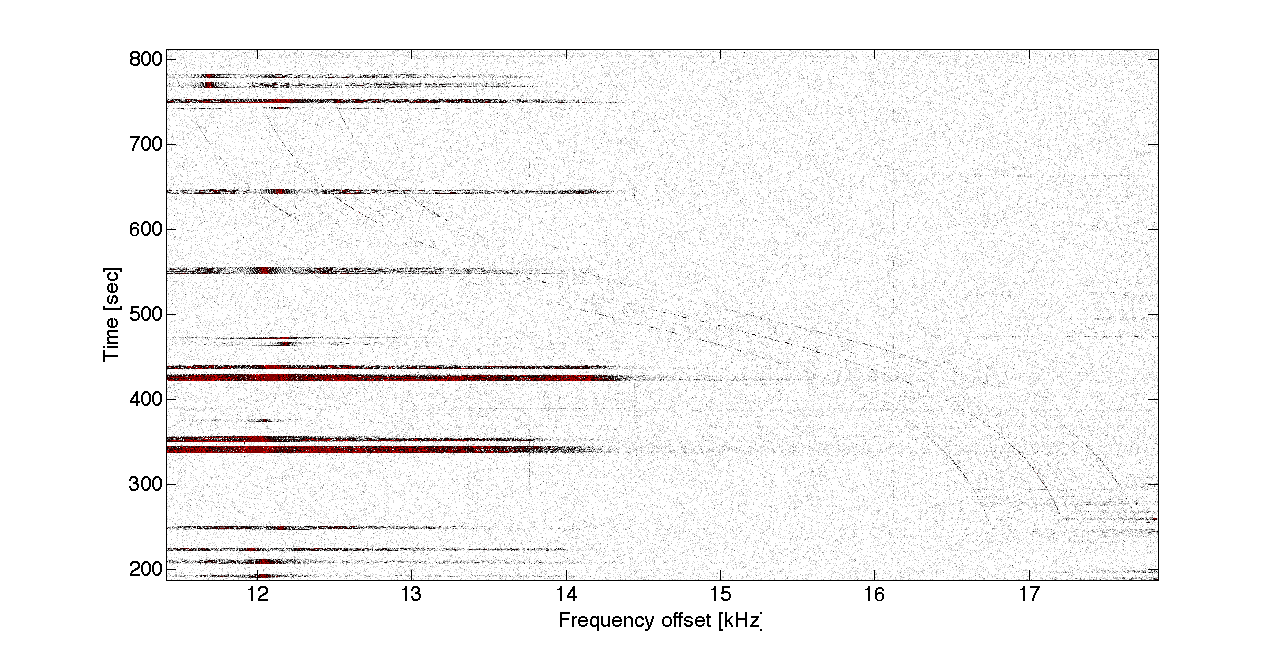
Did you hear about the story of a small satellite designed and build by students of Delft University of Technology? I mean a real satellite in SPACE!!! It is still flying and transmitting data back to Earth and you can listen to it! Some of my nerdy friends have complained that I cannot listen to the sound of satellites as I various times state on this blog (e.g. post , post , and post ). Something to do that sound does not propagate in vacuum, and space is almost vacuum. So, yes satellites do not make sound (20-20000 Hz for the human ear), however in my defence you can transform their radio signal (145.870 MHz) into sound. Its the same trick scientists do when they listen to the SOUND the universe makes (listen to it here !). But, lets get back on topic! Delfi-C3 is still operating and in honour of its almost 7 years in space, I wanted to write a small piece about it. To see if it is still operating, I have recorded the downlink signal of today's passes. After a Fourier t...

Listening to the sound of satellites

Afbeelding
Last week, components of the TUDelft satellite tracking station were delivered. This includes a radio, amplifiers, Software Defined Radio (SDR), a GPS-based clock and other cool electronics. We are now planning the integration of all the components in the existing ground station, which is used for the data downlink and command uplink of the Delfi-C3 and Delfi-n3Xt (both student designed and built satellites currently orbiting Earth). But how does this tracking (you speak of) works? It starts with capturing and recording the communications signal of the satellite, which is transmitted continuously (if the Sun shines on the solar cells to produce energy). This is where all the fancy and complicated electronics play a role. (However, I am not an expert in this, so I will only explain the physics behind it). The high frequency (145.870 MHz) electromagnetic signal is down-converted to a signal that can be made digital, such that a computer can process it. First we put the signal throug...

Horseshoe orbit

Afbeelding
This week I spend quite some time reading, correcting and grading assignments for a course called planetary sciences (As a PhD student you also have to do numb making work, it builds character...they say ;)). The assignment was about dynamics in space and in particularly the first question made me go back in time. The story starts a long, long time ago (well a few years but that doesn't sound exciting) in a city far far close by. I was a student learning the marvelous secrets of astrodynamics. Especially the three-body dynamics  (no not that situation you are think of) caught my attention. In a three body system (like the Sun-Earth-satellite, asteroid or an English teapot, but now we are sliding in a different discussion), all sort of fancy motions occur due to the interaction of both the attraction of the Sun and the attraction of the Earth. With a few simple assumptions, equilibrium locations can be found where asteroids will be drawn to. A so...